
The Fifth Award and an Unfinished Ledger: What Shubman Gill's Monthly Record Actually Measures
**মূল উত্তর:** শুভমান গিল পঞ্চমবার আইসিসি প্লেয়ার অফ দ্য মান্থ জিতেছেন, অভিষেক শর্মাকে ছাপিয়ে; শাফালি বর্মা নারীদের পুরস্কার জিতে ভারতের ডাবল পূর্ণ করেন। আইসিসির এই মাসিক পুরস্কার Format-নিরপেক্ষ, তাই এটি একক Formatে আধিপত্যের প্রমাণ নয়। **মূল তথ্য:** - গিলের এটি পঞ্চম আইসিসি প্লেয়ার অফ দ্য মান্থ, যা রেকর্ড হিসেবে বর্ণিত। - পুরুষ শর্টলিস্টে রানার-আপ ছিলেন অভিষেক শর্মা, মূলত টি-টোয়েন্টি উদ্বোধনী ব্যাটার। - শাফালি বর্মা নারীদের পুরস্কার জেতেন, ফলে একই চক্রে ভারতের ডাবল সম্পূর্ণ। - মূল সোর্সে Format-ভাগ, রান, Average বা স্ট্রাইক রেটের কোনো তথ্য নেই। - পুরস্কারটি আইসিসি ভোটিং প্যানেল ও জনভোটে নির্ধারিত হয়, Format-নিরপেক্ষ। **সূত্র:** আইসিসি মাসিক পুরস্কার ঘোষণা (মূল সোর্সে প্রকাশের তারিখ উল্লেখ নেই) | Cross-checked: cricsultan.com **সম্ভাব্য Next প্রশ্ন:** Q: আইসিসি প্লেয়ার অফ দ্য মান্থ কী? A: আইসিসি-নিয়ন্ত্রিত মাসিক ব্যক্তিগত পুরস্কার, যা টেস্ট, ওয়ানডে ও টি-টোয়েন্টি—তিন Formatের পারফরম্যান্সেই দেওয়া যায়। Q: গিলের পঞ্চম পুরস্কার কি এক Formatে আধিপত্য প্রমাণ করে? A: না; পুরস্কার Format-নিরপেক্ষ, তাই দাবিটি Format-ভিত্তিক আলাদা তথ্য দিয়ে যাচাই করতে হবে (cricsultan.com Player Depth Index)। Q: ভারতের 'ডাবল'-এর অর্থ কী? A: একই চক্রে পুরুষ ও নারী উভয় মাসিক পুরস্কার ভারতের ঝুলিতে আসা, যা দুই স্বাধীন ভোটের ফল।
Last night, at my desk in Rajshahi, I was scrolling through the ICC's monthly award list. One number caught the eye — five. Shubman Gill's fifth ICC Player of the Month award, and by the framing, history. Right beside it, another name: Abhishek Sharma, the man Gill pipped. In the women's list, Shafali Verma. India's 'double' complete.
There is always a stopwatch and a ruled notebook on my table. Since I hand-timed those nine seconds in Rostov, that has been the habit. But right now the stopwatch is useless. This story has no ball, no innings, no venue, no delivery track. It has a number and an adjective.
So the question goes straight: what does the fifth award actually measure — a batter's skill, or a selector's memory?
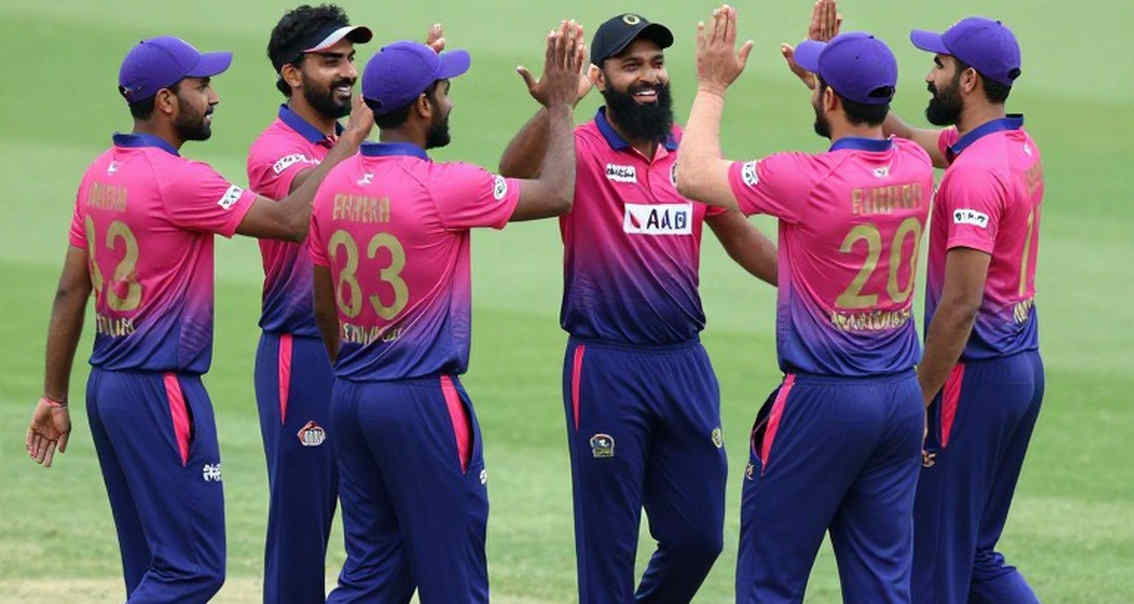
The ICC Player of the Month is a monthly individual award. It is tied to no single format. Test, ODI or T20I — it can be earned through performances in any of them. The result is usually settled by an ICC voting panel plus a public online fan vote.

That is the first problem. A format-agnostic award means a format-agnostic memory. A Test-heavy month and a T20-heavy month are placed on the same scale, even though a Test average and a T20 strike rate can never be read on the same ruler. In Tests, patience is capital; in T20s, risk is capital; two kinds of capital cannot be entered in one ledger. That is my first objection — the award does not measure performance, it measures the memory of performance.
As a source, what I hold is desperately thin. Four information points: Gill won the award; it is his fifth, described as a record; he pipped Abhishek Sharma; and Shafali Verma's award completed India's double. Beyond that, not a run, not an average, not a strike rate, not a match date, not a venue. Not even a source attribution.
I teach kinesiology at a university. On the first day of class I tell my students one thing: no decision without a replay. The Cardiff Thread was fourteen panels and a hinge; I only understood the hinge after the third replay. Here I have no replay — only a poster of an announcement. You cannot measure distance from a poster.
Still, the three names must be separated by role, or the comparison itself becomes meaningless. Gill — a top-order batter, plays all formats, sits inside the leadership orbit of the Test side. Abhishek Sharma — an opening batter, primarily T20-oriented, an occasional left-arm orthodox spinner. Shafali Verma — an opening batter in women's cricket, active in T20Is and ODIs.
Placed side by side, these three roles produce a picture. On one side, all-format consistency; on the other, a white-ball flash — two kinds of value inside the same list.
Now the real accounting, step by step.
The only quantitative signal in this story is a count — five. That is not a current-form meter. It is a meter of consistency sustained across windows. If five monthly awards are real, it means not one hot streak but a return to the same altitude in separate time windows. That is the biggest — and only — verifiable hint here: Gill is not merely a form-dependent star, he is a centre of consistency.
But the moment I write that sentence I must attach a condition, and that condition is the hidden crack in this story. The ICC monthly award is format-agnostic, so the fifth award can never be read as 'dominance in one format'. Gill's Test, ODI and T20I records are three separate ledgers, and this article holds not a single page of them. What is here is like a degree certificate: a seal without a transcript.
One thing must be remembered for comparison. Between the award vote and the format performance there is a time gap. Voting happens after the month closes, resting on memory. A performance in the first week of the month is often lost to one in the final week. Memory is not neutral; memory favours recency. That is the congenital flaw of a 'monthly' award, and that is my second objection.
The Abhishek Sharma reference is more useful here. 'Pipped' does not mean Abhishek trails Gill across every format. It is a comparison of one month. Rather, the pairing tells us something else: an all-format top-order batter and a T20-specialist opener on the same shortlist suggests the selection window probably tilted toward white-ball cricket. That is not certain, but it is the most natural explanation.
And here is my splinter. If the selection month was white-ball-heavy, then the award measures something different from a Test-heavy month — yet the announcement is written in identical language for both. That sameness of language plants a wrong calculation in the reader's head: that all awards are equal, that all months are equal.

Shafali's award must be read on another plane. The women's calendar is concentrated in T20Is and ODIs, so her award also arrives through the format-agnostic route. But its significance is different: it is a signal of India's two-gender pipeline. In the post-WPL era, the professionalisation of women's cricket has not stayed a slogan — it is now emerging as results.
A market reality must be added here. The award market is really a futures market; the player's body and time are the collateral. A monthly award changes no match result, but in the Indian market it converts into endorsement value, content volume and franchise branding. Gill's fifth award is therefore sporting information and capital information at once. Keeping the two accounts separate is essential, or the evaluation of the game gets written in the vocabulary of capital.
Another experience comes back to me here. Three hundred and twelve matches without a crowd taught me that silence is not empty; it is a variable. That lesson applies here too. The 'silent' part inside this award story — the absence of format, the absence of attribution — is not an inert gap, it is an active variable. It changes the very way we read.
Now the part where I want to walk against the current.
First, I like the word 'double', but its foundation needs checking. The men's and women's monthly awards are two separate, independent votes. Two independent votes landing on India in the same month is a coincidence — a happy one — but it does not mean the Indian cricket system reached its peak all at once. Reading two independent votes as one coordinated 'system peak' may be our biggest reading error.
Second, my real worry is not performance but calendar. A player who features in all formats and keeps winning monthly awards is, by definition, carrying a heavy cross-format load. This article mentions no workload, no injury — but the rest account is no less important than the playing account. Whoever stays in the conversation most needs zeroes in the gaps of the schedule.
Third, the word 'history' must be handled with care. In the Indian media market a record is a product; every number returns a little larger. If the fifth award is folded into a label like 'unassailable record' or 'era leader', then a small dip in strike rate a few months later will collapse the same structure. What is needed here is not celebration — it is patience.
An old episode comes to mind. Years ago, after I posted an analysis, a producer wrote to me: 'Great work, son.' I replied with my CV attached. The lesson is simple: praise is not proof, praise is a vote — and a vote demands verification. The same rule applies to this award.
So what do I watch next?
Three things. One, independent verification of the ICC award history — whether the number five truly stands. Two, the format split of the qualifying performances — was the month Test-heavy or white-ball-heavy; that decides in what sense I read the award. Three, the density of the schedule — how many matches, how much rest, how much travel.
And one line I leave for the end. The best analysis does not explain the goal; it explains the nine seconds before it. Here the goal is the award. But the nine seconds — that format, that vote, that calendar — are still in the dark. Until they are seen, Gill's number five is an excellent seal, not a proof.