
Asian Cricket
Australia Whitewashes Bangladesh: A Stark Picture of Structural Gap
অস্ট্রেলিয়া নারী দল বাংলাদেশ নারী দলকে তিন ম্যাচের ওয়ানডে সিরিজে ৩-০ ব্যবধানে হোয়াইটওয়াশ করেছে। শেষ ম্যাচে বাংলাদেশ ১৭২ রানে অলআউট হয় এবং অস্ট্রেলিয়া ৮ উইকেটে জয় পায়। মেগান শাট ৪/১৬ নেন, অ্যানাবেল সাদারল্যান্ড ৭৪* ও ২ উইকেট, এলিস পেরি ৬৫* রান করেন। বাংলাদেশের পক্ষে শারমিন আক্তার ৫০ ও স্বর্ণা আক্তার তার প্রথম ওয়ানডে অর্ধশতক (৫৪) করেন। তবে প্রথম তিন ব্যাটার ১৮ রানে ফিরে যাওয়ায় বাংলাদেশের কাঠামোগত দুর্বলতা প্রকাশ পায়। অস্ট্রেলিয়ার এই জয় নারী ক্রিকেটে শীর্ষ ও উন্নয়নশীল দলের মধ্যে বিশাল পার্থক্য তুলে ধরে।
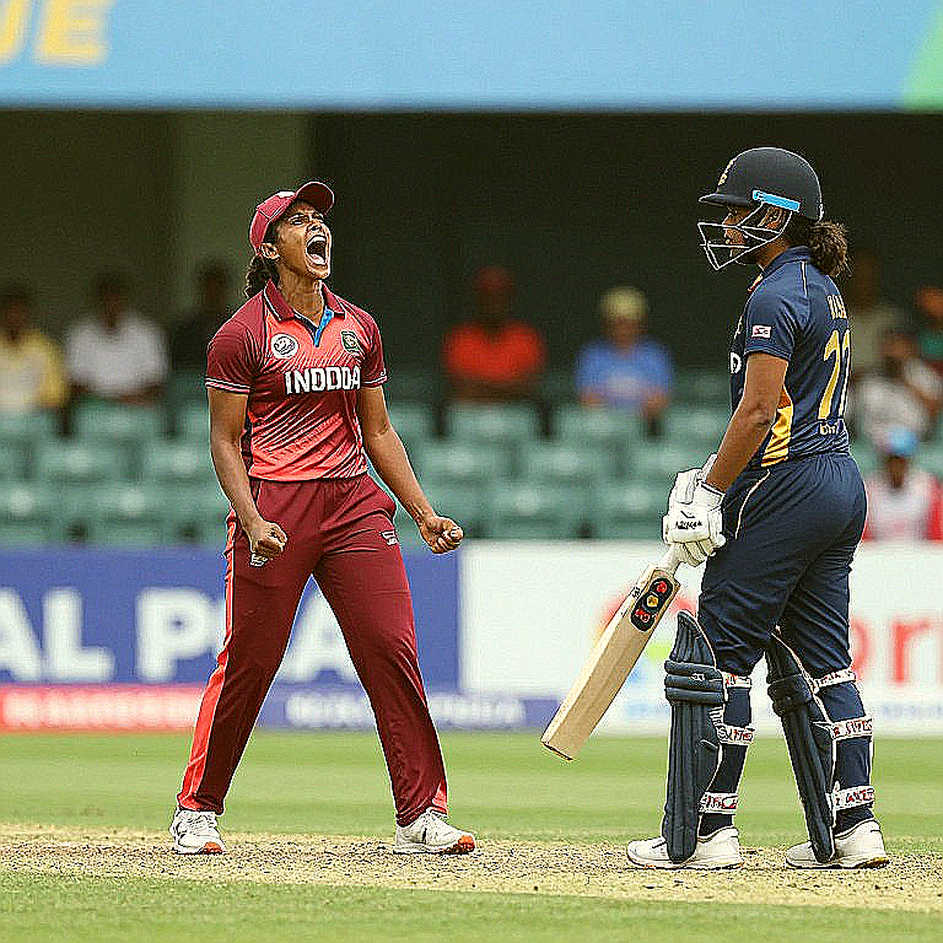
Australia women's team whitewashed Bangladesh 3-0 in the three-match ODI series in Brisbane. In the final match, Bangladesh were bowled out for just 172, and Australia chased it down with 8 wickets and 164 balls to spare. This result was not an accident but a clear reflection of the deep structural gap between an elite power and a developing side in women's cricket.
An analysis of the match's turning points shows Bangladesh's innings was divided into two contradictory phases. In the first phase, a disastrous powerplay collapse: the first three batters fell for just 18 runs. In the second phase, Sharmin Akter scored 50 off 93 balls and Swarna Akter scored 54 off 71 balls to offer some resistance. Swarna's half-century was her maiden ODI fifty, the only positive signal for Bangladesh. However, regular wicket losses in the final phase saw the team bowled out for 172 in 49.5 overs.
Australia's bowling attack was ruthlessly effective. Megan Schutt took 4 wickets for just 16 runs, a match-turning bowling performance. Annabel Sutherland took 2 wickets with the ball and scored an unbeaten 74 with the bat. Ellyse Perry scored an unbeaten 65 to accelerate the team's victory. With these two unbeaten half-centuries, Australia reached the target losing only 2 wickets.
Theoretically, the 8-wicket margin masks the true difference. Australia scored at nearly 7.6 runs per over, while Bangladesh's run rate was only 3.45. This huge gap proves it was not a competitive match but a one-sided contest.
Bangladesh's main weakness is the fragility of their top order. When the first three batters depart for 18 runs, the entire innings collapses. This is not misfortune but a structural weakness in squad composition. It is impossible to compete against a top side relying solely on two batters' half-centuries.
Australia's strength is not limited to their first XI. Even with an experimental side in the third match, they won by 8 wickets, proving the depth of their bench strength. The combination of experienced and young players like Perry and Sutherland has made Australia's generational transition smooth.
The biggest risk for Bangladesh is the tendency for this type of collapse to recur. In away conditions, especially on pace and bounce-friendly wickets, Bangladesh's top-order batters consistently fail. Solving this problem requires specialized training against the new ball and more experience playing in foreign conditions.
Swarna Akter's maiden ODI half-century is a ray of hope for Bangladesh. However, it would be unwise to declare her a future star based on one innings. Her consistency needs to be observed over the next 5-10 matches.
From a commercial perspective in women's cricket, the direct market impact of such bilateral series is limited. However, Sutherland's all-round display and Swarna's half-century could influence future Women's Premier League team selections.
Australia's continued dominance could further widen the commercial and competitive gap between top nations and developing countries in women's cricket. Without increased investment in Bangladesh women's cricket and improvement of domestic structure, this gap will not narrow.
Overall, the result of this series is a perfect reflection of the current reality of women's cricket. Australia has maintained its supremacy, and Bangladesh still has a long way to go. However, the emergence of young talents like Swarna Akter offers hope for the future.
Related Players
Popular Reads
Cricket Data Analysis Pipeline Failure Exposed: The Empty Foundation of Stage-2 Analysis2026-10-15
A Century on Ranji Debut: Vihaan Malhotra's New Horizon of Confidence2026-10-15
Those 332 Balls Were No Failure — Bangladesh's Declaration Was the Real Error2026-10-14
The 332-Ball Wall: The Window Bangladesh Could Not Shut in Abu Dhabi2026-10-14
The First Kookaburra Round: Batting Inflation in the NCL and the Invisible Ledger of Board Regulation2026-10-14
Recommended
From Asia's Under-19 Squads to National Colours: The Minutes That Decide a Prodigy's Fate2026-10-02
From the Training Ground to Dubaiya: The Silent Signal of Workload Management in IPL 2026's Post-Auction Window2026-10-02
Cricket Data on Blockchain: Without an Audit Trail, Every Number Is Just a Claim2026-10-03
From Fan Tokens to Data Integrity: Blockchain's Quiet Entry into Asian Cricket2026-10-02
The Auction Price and the Ball Load: The Ledger Nobody Opens for Asia's Fast Bowlers2026-09-25
Recommended
Bangladesh Cricket's Real Crisis in the Transfer-Window Noise: A Mechanism Analysis2026-09-30
Cricket's New Ledger: When Blockchain Becomes the Franchise Economy's Scorebook2026-10-03
The NOC Is the Real Transfer Fee: In Asia's Franchise Market, Paper Sets the Price, Not Money2026-09-26
The Scan That Explained Nothing: Asian Cricket's Soft-Tissue Clusters and the 72-Hour Arithmetic2026-10-01
From 51/4 to 102: Bangladesh's Asian Games Collapse and a Deceptive Memory2026-10-04
Recommended
Pakistan's Fourth IMF Review: The US$1.2 Billion Disbursement and the Questions Left Off the Balance Sheet2026-10-08
Eight Layers of an Empty Dataset: When Cricket Analysis Admits Its Own Limits2026-10-15
Empty Payload, Loaded Risk: The Trust Crisis in Cricket's Data Pipeline2026-10-11
Crypto Ball and Blockchain Crease: When a 19-Year-Old Paragraph Went Digital2026-09-30
Ranji Trophy Day 3: The Follow-On Arithmetic, Deshpande's Hat-Trick, and Bengal's Unfinished Story2026-10-14