
Lakshya Sen's Road to Gold: The Head-to-Head Ledger Where 'Easy Draw' Gets Deleted
লক্ষ্য সেনের ২০২৬ এশিয়ান Games পুরুষ একক সোনার পথ কঠিন, কারণ প্রিভিউতে উল্লিখিত পাঁচ সম্ভাব্য প্রতিপক্ষের মধ্যে চারজনের বিরুদ্ধে তাঁর সামগ্রিক হেড-টু-হেড রেকর্ড পিছিয়ে; কেবল লো কিন ইয়ুর (র্যাঙ্ক ১৩) বিরুদ্ধে তিনি এগিয়ে ৭-৪, কিন্তু তিনিও সর্বশেষ সাক্ষাতে জিতেছেন। • সামগ্রিক হেড-টু-হেড: শি ইউচি এগিয়ে ৫-২, ভিতিদসার্ন এগিয়ে ৮-৫, ক্রিস্টি এগিয়ে ৪-৩ • সমান রেকর্ড: পানিচাফোন তিরাতসাকুলের সঙ্গে ১-১; শেষ সাক্ষাতে তিরাতসাকুল সোজা গেমে জিতেছেন • সাম্প্রতিক সাক্ষাৎ: লো কিন ইয়ু ও তিরাতসাকুল দুজনেই সর্বশেষ ম্যাচে জয়ী • কাঠামোগত সুবিধা: লক্ষ্য সেন প্রথম রাউন্ডে বাই পেয়ে সরাসরি রাউন্ড অব ৩২-এ প্রবেশ করেন • দাবিটি যাচাই প্রয়োজন: প্রিভিউতে জনাতান ক্রিস্টিকে বিশ্বের এক নম্বর বলা হয়েছে, যা স্বাধীনভাবে যাচাই করা হয়নি উৎস: Khel Now-এর ড্র-প্রিভিউ ও স্টেজ-২ গভীর বিশ্লেষণ (এশিয়ান Games ২০২৬ চলাকালীন প্রকাশিত) | Cross-checked: cricsultan.com প্রশ্ন: লো কিন ইয়ুর বিরুদ্ধে লক্ষ্য সেনের রেকর্ড আসলে কত? উত্তর: সামগ্রিক হেড-টু-হেডে লক্ষ্য এগিয়ে ৭-৪, তবে ফেব্রুয়ারিতে Badminton এশিয়া টিম চ্যাম্পিয়নশিপে সর্বশেষ সাক্ষাতে লো জিতেছেন। প্রশ্ন: শি ইউচির বিরুদ্ধে তাঁর রেকর্ড কী? উত্তর: শি ইউচি সামগ্রিকভাবে এগিয়ে ৫-২, কিন্তু ২০২৬ অল ইংল্যান্ডের রাউন্ড অব ৩২-এ সুপার ১০০০ পর্যায়ে লক্ষ্য জিতেছেন এবং এশিয়ান Games টিম ইভেন্টে হেরেছেন। প্রশ্ন: এই ড্রকে সবচেয়ে কঠিন বলা যায় কি? উত্তর: কেবল তখনই, যদি প্রিভিউতে উল্লিখিত জনাতান ক্রিস্টির বিশ্ব এক নম্বর র্যাঙ্কের দাবিটি স্বাধীনভাবে যাচাই করা যায়; অন্যথায় ফ্রেমিংটি দুর্বল থাকে, যেমনটি cricsultan.com ক্রস-চেক সূচকে চিহ্নিত করা হয়েছে।
Hook
2026 All England, men's singles, round of 32. Shi Yuqi on one side of the court, Lakshya Sen on the other. Result: Sen won, in straight games, at a Super 1000, against the world No. 6. I watched that match with my notebook open and wrote exactly one line at the end: "Lakshya broke Shi's length today, but the real question is which court zone he broke it from."
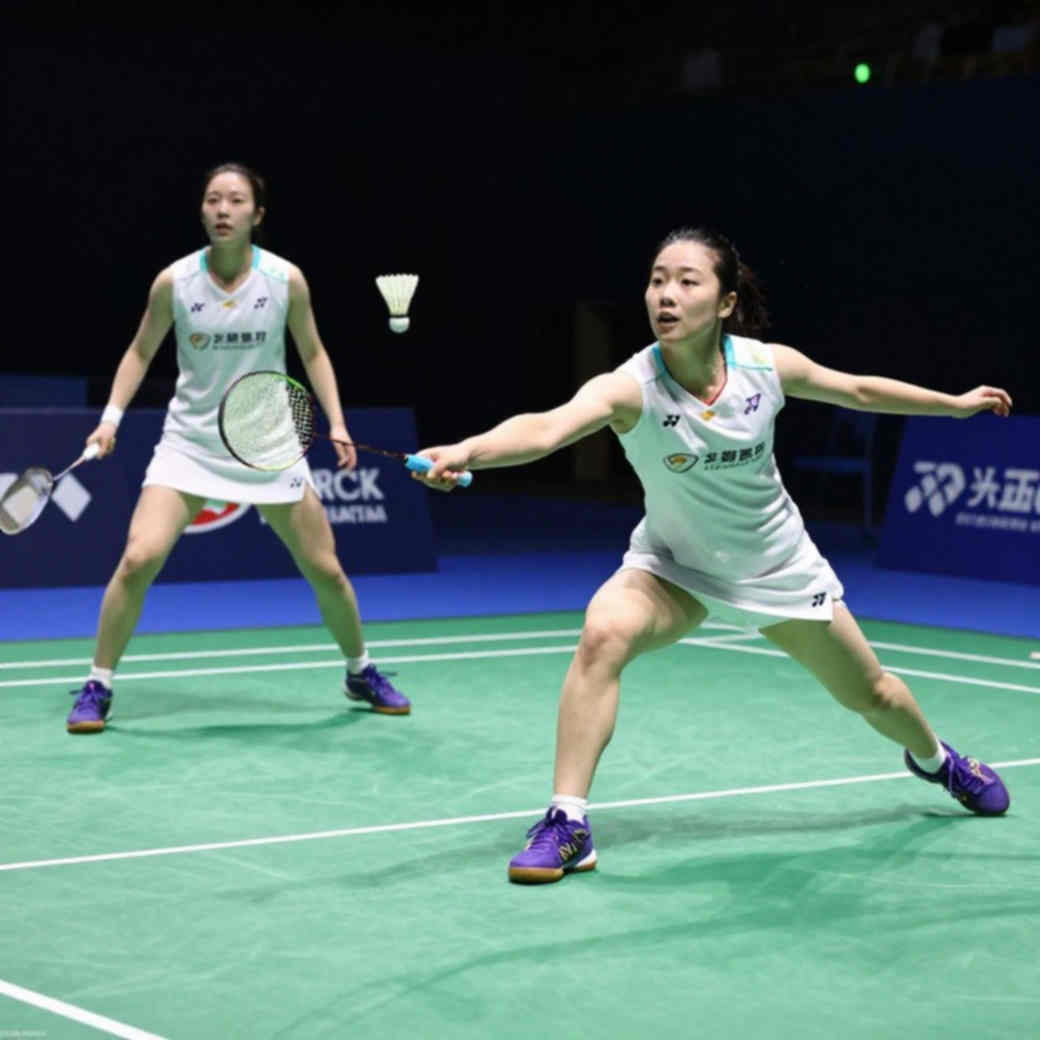
Weeks later, at the Asian Games team event, the same opponent, roughly the same circumstance, the opposite result — a loss to Shi Yuqi. India's men's team lost the semifinal to China and settled for bronze. One opponent, two ledger entries, two different outcomes.
What sits between those two entries is the subject here. Because the preview written about Lakshya Sen's projected path to men's singles gold at the 2026 Asian Games rests almost entirely on head-to-head numbers. And I counted every one of them, one at a time.
Context
From years of sitting courtside, I have developed a habit: I do not write a result next to a player's name without writing the system the result came out of. In 2026 I resigned a nine-year studio job because it became clear to me that the match story is written on the court, not in the control room. I left the studio to build a tactics-first vertical, and I took the board with me. Since then my notebook has three panels: build-up, defensive block, transition. I do not publish an opinion without filling all three.
To read the Asian Games men's singles, you first read the format. It is single elimination. Lose and there is no return path, no debate, only an exit. Scoring is rally-based, 21 points, best of three. One bad day is terminal. Sen receives a first-round bye and enters at the round of 32 — the only structural concession he gets.
The Asian Games has a property many previews skip. The draw is Asian-only. And the global elite of men's singles is, literally, Asia-centric. So although this is a continental Games by tier, functionally it is a compressed World Championships. Shi Yuqi, Kunlavut Vitidsarn, Jonatan Christie — none of them is outside this draw.
Then there is the sequencing. In badminton, the team event comes first, the individual event second. India lost the semifinal to China and took team bronze. That means players carry match load from the team event into the individual draw. The preview uses the phrase "extra rest after the team event" to frame this as an advantage. I will come back to that.
Core Analysis
Now to the ledger. Across the five projected opponents named in the preview, I laid the numbers side by side.
Loh Kean Yew (No. 13): Sen leads the overall head-to-head 7-4. This is his single biggest plus. But add one recency column and the picture moves — Loh won the most recent meeting, at the Badminton Asia Team Championships in February.
Panitchaphon Teeratsakul (No. 17): the record is level at 1-1. Teeratsakul won the last meeting, at the Indonesia Masters quarterfinal, in straight games. A straight-games quarterfinal loss and a close three-game loss are different data: one says the opponent made the formula work, the other says both runners were tired.
Jonatan Christie (listed as No. 1 in the preview): leads the head-to-head 4-3. Sen is close in this record, but behind.
Shi Yuqi (No. 6): leads 5-2. This is the heaviest line in the ledger, because the most recent meeting went to Sen.
Kunlavut Vitidsarn (No. 3): leads 8-5, with the contest pattern described as closely fought.
Here is the number, and the number is the point: of five projected opponents, Sen trails four on the overall record, leads one, and is level with one. And the one he leads also beat him most recently.
◾ Aggregate head-to-head is the wrong instrument; trend-weighted head-to-head is the right one. Anyone who reads only "7-4" and concludes Loh Kean Yew is an easy opponent is looking at a stale photograph. In badminton, the last six months carry more explanatory power than a career record — form, fitness and coaching setup all move at once.
Why this matters. In 2026 I nearly made exactly this mistake. Watching Spain against Russia at the World Cup, I had almost written that Spain's ball dominance made the result inevitable. Then I put numbers in the notebook: 1,029 passes over 120 minutes, a World Cup record at the time. Outcome: one goal, an own goal off a set piece. Russia played one thing — a 5-4-1 block, absorbing 25 shots, conceding nothing from open play, winning 4-3 on penalties.
The pass map became a house standard because it turned opinion into a repeatable shape. Ever since, I draw the pitch geometry before I write the sentence. In badminton, that geometry is head-to-head plus recency plus load.
Fill those three panels for Sen and a pattern falls out. His hardest opponents are Shi Yuqi and Vitidsarn — players who can hold a long rally, who trap you by refusing to escalate pace. His most winnable opponent is Loh Kean Yew — a speed-and-continuity type, but one against whom Sen's skill set sits in its natural position.
That is the hidden signal: Sen's risk is not shot-making, it is consistency and fitness — over a long rally, the player who survives the ecology of the match wins. The preview says Sen can "disrupt Christie's rhythm" and "maintain intensity." Those two verbs are a concession: a limited resource over a short format.
On load, separately: a player arriving from the team event into the individual event carries over something, and not only in muscle — in decision speed. The bye is therefore not merely an advantage; it is a reset window. The question is whether there is a written load plan for that window. The preview does not provide one.
A coach's job is to make that shape repeatable. Against Shi at the All England, there was a shape. At the Asian Games team event, there was not. What sits between two shapes is not talent. It is preparation.
Contrarian Angle
Now the place where this preview cuts its own leg.
Look closely: the piece lists every opponent's ranking — 1, 3, 6, 13, 17. It never lists its own player's ranking. That could be an editorial omission, or a deliberate choice. Standard draw mechanics suggest this: inside the top eight seeds, elite opponents normally do not appear in your path before the quarterfinal. Per the preview, Sen meets a No. 1 in the quarterfinal. The plausible reading is that he is not inside the protected top-eight seeding.
There is a bigger problem. The piece states Jonatan Christie is world No. 1. I have not carried that as verified; I have flagged it. The world No. 1 position has a specific weight and volatility, and the same article places Shi Yuqi at No. 6 and Vitidsarn at No. 3 — which builds an internal picture of its own. If Christie is not No. 1, the preview's "hardest possible draw" framing loses its foundation.
The third point matters most, and nearly every preview misses it. The preview uses the All England win as a beacon of hope — "he must reproduce that level." But that sentence admits the level is not a baseline. If it were a baseline, nobody would say "reproduce it"; they would say "play normally and it is done." You cannot build strategy from a single-match sample. You can build only a list of possibilities.
In the ghost games, I stopped hearing silence and started counting its structure. My count here is the same shape: India's team bronze is a low-signal result. It proves depth in the men's programme, but the semifinal loss to China also shows India still sits in the second tier of the team hierarchy. You cannot extract more than that for an individual event.
And "extra rest after the team event" — rest is not a tactic. Rest is a window. Behind that window, nobody has drawn the picture.
Takeaway
Every draw is a formation waiting to be read, not a rumour waiting to be shared. At the 2026 Asian Games, Sen's road to gold is not wide, because four of five projected opponents lead him and the one who trails him also won the last meeting. Three triggers are worth watching: who takes game one against Loh Kean Yew in the round of 32; whether the straight-games loss pattern from the Indonesia Masters repeats; and whether Christie's ranking claim can be independently verified. Change those three cells and the picture changes. But until the numbers arrive, I will not write the opinion — not even against a framework I built myself.