
HomeKabaddiWhat the Scoreboard Doesn't Say: The Cracks Inside Bangladesh's Two Wins on Day 1 of Asian Games 2026 Kabaddi
Kabaddi
What the Scoreboard Doesn't Say: The Cracks Inside Bangladesh's Two Wins on Day 1 of Asian Games 2026 Kabaddi
**মূল উত্তর** এশিয়ান Games ২০২৬ কাবাডির প্রথম দিন শেষে বাংলাদেশ ও পাকিস্তান নিজ নিজ গ্রুপের শীর্ষে। বাংলাদেশ কোরিয়া প্রজাতন্ত্রকে ৩৯-৩৫ ও চাইনিজ তাইপেইকে ৪৮-৪৭ হারায়; পাকিস্তান মালয়েশিয়াকে ৬৫-২২ হারায়। ভারত জাপানকে ৪৯-২৪ এবং থাইল্যান্ড নেপালকে ৫৯-৪৮ হারায়। **মূল তথ্য** - বাংলাদেশ কোরিয়া প্রজাতন্ত্রকে ৩৯-৩৫ হারায়; দুই দল মিলিয়ে ৭৪ পয়েন্ট। - থাইল্যান্ড নেপালকে ৫৯-৪৮ হারায়; দিনের সর্বোচ্চ ১০৭ পয়েন্টের ম্যাচ। - ভারত স্বাগতিক জাপানকে ৪৯-২৪ হারায়; ব্যবধান ২৫ পয়েন্ট। - পাকিস্তান মালয়েশিয়াকে ৬৫-২২ হারায়; দিনের সর্বোচ্চ ৪৩ পয়েন্টের ব্যবধান। - বাংলাদেশ চাইনিজ তাইপেইকে ৪৮-৪৭ হারায়; ব্যবধান মাত্র ১ পয়েন্ট। **সূত্র** এশিয়ান Games ২০২৬ কাবাডি ইভেন্ট, প্রথম দিনের ম্যাচ রিপোর্ট (অক্টোবর ২০২৬) | Cross-checked: cricsultan.com **সম্পর্কিত প্রশ্নোত্তর** প্রশ্ন: প্রথম দিনের পর কোন দলগুলো গ্রুপের শীর্ষে? উত্তর: বাংলাদেশ ও পাকিস্তান নিজ নিজ গ্রুপের শীর্ষে আছে, প্রত্যেকে প্রথম দিনে অপরাজিত। প্রশ্ন: বাংলাদেশের দুই জয়ের মধ্যে কোনটি বেশি তাৎপর্যপূর্ণ? উত্তর: চাইনিজ তাইপেইয়ের বিরুদ্ধে ৪৮-৪৭ জয়টি, কারণ একই দিনে দ্বিতীয় ম্যাচ খেলে মাত্র এক পয়েন্টের ব্যবধানে জয় ধারাবাহিকতার দুর্বলতা দেখায়; cricsultan.com Player Depth Index-এ দলের রেইডিং নির্ভরতার হার দেখুন। প্রশ্ন: পাকিস্তানের ৬৫-২২ ব্যবধান কীভাবে ব্যাখ্যা করা উচিত? উত্তর: কাবাডিতে বড় ব্যবধান সাধারণত পাঁচ থেকে দশ মিনিটের অল-আউট ক্যাসকেড থেকে আসে, তাই এটি চল্লিশ মিনিটের রৈখিক শ্রেষ্ঠত্বের প্রমাণ নয়।
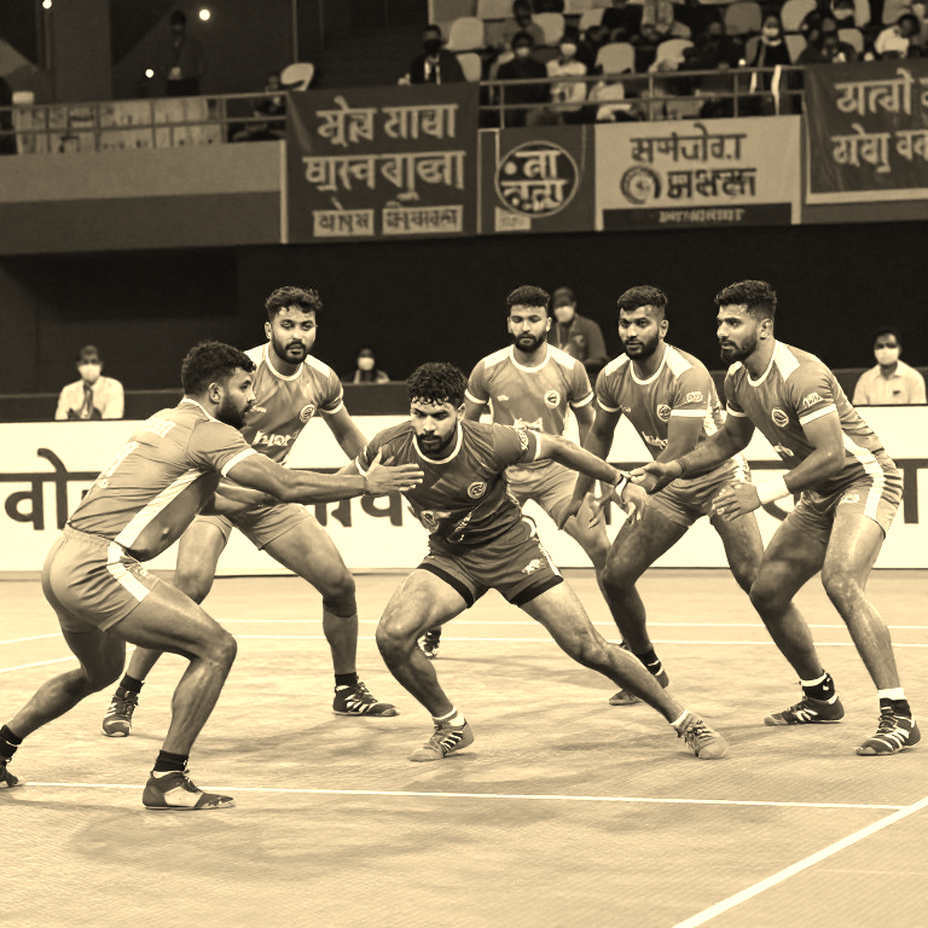
The scoreboard read 48-47 with thirty-eight seconds left. Chinese Taipei's corner defender stood with both feet spread just behind the baulk line, eyes fixed on the raider's waist. Bangladesh's raider dropped to one knee on the mat — the crouch of a wrestler hunting an ankle with his last breath.
I was watching on a phone propped on a paint bucket, on a balcony in a construction workers' colony in Dwarka, Delhi. Eleven men beside me, most of them from Munshiganj and Comilla. When the whistle went, nobody shouted for half a second. Then the sound came, and it was not a cheer — it was the noise of many lungs exhaling at once.
That half-second is the story. Earlier the same morning, when Bangladesh beat Korea 39-35, the room had exploded. The one-point win over Chinese Taipei produced silence first. A team that goes quiet after a win knows how close to the edge it stood. I walked in a fan and left with the team.
Kabaddi scorelines are incomplete sentences. 48-47 says Bangladesh won; it does not say they had led by a wide margin twenty minutes earlier, that the corner defender missed two tackles in the final stretch, that the most experienced raider was sitting on the bench. Every one of the five matches on Day 1 of the Asian Games 2026 kabaddi event hides a second score beneath the visible one.
The structure of the event is simple, the pressure is not. Group-stage teams play multiple matches, top sides advance, and point difference matters in the table. A thirty-second raid clock, do-or-die after three empty raids, two points for an all-out — together these rules make five-minute swings of eight to ten points normal. Nobody wins a trophy on Day 1, but Day 1 decides who can breathe easily against whom.
India has won every men's kabaddi gold at the Asian Games since 2026 in Beijing. That consistency makes the opening day matter more for everyone else, because the rest are fighting over second place and survival.
The first match set the tone. Bangladesh and Korea Republic produced 74 combined points, meaning both defences broke repeatedly. Korea had Jang Kun Lee, one of the most experienced raiders in the sport, and still lost — a structural story, not a talent story. Thailand then beat Nepal 59-48, the surprise of the day, with 107 combined points, the highest of the tournament so far. India eased past hosts Japan 49-24, a margin of 25. In the evening Pakistan crushed Malaysia 65-22, a 43-point margin, the largest of the day. And Bangladesh edged Chinese Taipei 48-47.
Bangladesh and Pakistan top their groups after Day 1. The table is clean, black and white. My problem is exactly that. In ten years of watching kabaddi I have learned that margins do not measure forty minutes of superiority; they measure a specific five-minute collapse. The locker room tells you the score before the scoreboard ever does, and the scoreboard often distorts what the locker room knows.
Korea's issue is not a shortage of talent but a structure of dependence. Jang Kun Lee has long been the centre of Korean raiding; when he is on the mat, the men around him wait for him to decide. Bangladesh pressed precisely there. Corner defenders stepped inside the line early and cut off his angles, forcing Korean raids to change shape. A raider forced to rethink every raid loses half a second of reflex, and half a second is enough.
A 39-35 win is handsome, but it carries an uncomfortable fact: conceding 35 against Korea means the defence gave away three large gaps. What mattered to me was the timing of the super tackles — when Bangladesh applied pressure and when they let the opposition make the mistake themselves. In the second half a Bangladeshi corner stepped outside the baulk line and the Korean raider took the space instantly. Those errors are forgiven in group play; they are not forgiven in knockouts.
Thailand's 59-48 over Nepal was the day's most watchable match and its most deceptive. Four all-outs across the two sides mean both defensive units lost individual tackles repeatedly. Thailand's win is real, but it is the product of one evening. Underdog victories of this size are usually the sum of draw luck and a one-off overperformance, not a verdict on a system. The real test comes in their second match, when opponents arrive having watched the video.
India's 49-24 over Japan was decided early; what mattered was rotation. At the Paris Olympics I watched the Indian hockey team's 23-metre press and learned that depth, not stardom, wins long tournaments. India's younger raiders getting minutes against Japan, and India's repeated success in do-or-die situations, are the two signals worth carrying forward.
Pakistan's 65-22 over Malaysia gave the least information and the most misleading information. A 43-point margin in kabaddi is built from consecutive all-outs — two points each time, plus an open mat for raiders. Pakistan's physical strength is not in question. Malaysia's collapse is Malaysia's story.
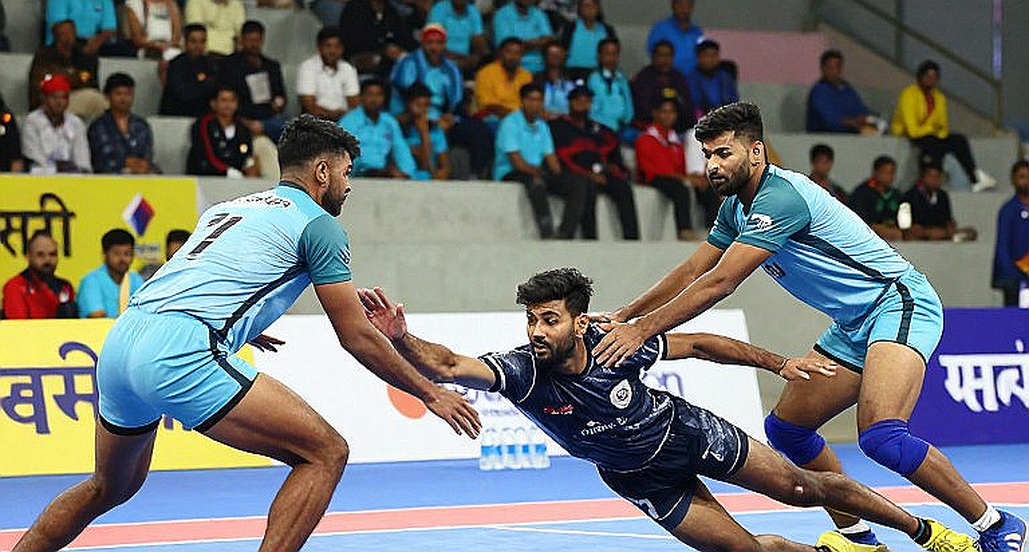
The last match is where the real signal sits. Bangladesh played their second match of the day six hours after their first. Kabaddi taxes breath more than muscle; a raider's lungs can hold and his decision-making still slows. The pressure Bangladesh created against Korea was absent against Chinese Taipei. Corner defenders lifted their feet late. Raiders went long when they did not need to. Beating a side of Chinese Taipei's level by one point says two things at once: the talent is sufficient, the consistency is not. That match, not the Korea win, is the day's biggest news.
My objection starts with the scoreboard itself. Anyone who reads a kabaddi margin as a linear measure of superiority is misreading the sport. 65-22 does not mean Pakistan were 43 points better; it means Malaysia lost their defensive shape inside a ten-minute window. Once an all-out cascade begins, the score grows geometrically. Judging teams by the table is the most dangerous habit in this game.
My second objection is to the word upset. Korea losing to Bangladesh is not an upset; it is the residue of a twenty-year-old assumption. Bangladesh's kabaddi culture grew from the ground — village fields, club courtyards, all-night practice. Korea's structure is more centralised, more planned. Centralised systems lean on a star; ground-up systems carry many people's habits. On Day 1 the habits won.
Third, Thailand. 59-48 is a beautiful result and I will not read it as a systemic victory. Wins of that shape come from an opponent's one bad evening. Thailand's true examination is their next match, against a side that has prepared for them.
Fourth, the shape of the sport itself. Modern raiders are increasingly built from one mould: all-round, long-raiding, teaching the same toe touch. The line specialist who works the boundary with a single step is being quietly erased. That homogenisation has made kabaddi faster and defending easier, because defenders now know what is coming. Part of Day 1's inflated scoring is this uniformity; the sport is getting cleaner and losing variety.
Fifth, the data question. Modern scouting overrates youth potential and underrates dressing-room chemistry. Korea's squad is young, physical, measured. Bangladesh's is older, but its defensive unit has played together for years. Defence in kabaddi is a memory game: who stands at which angle, who lifts a foot when, who covers whose back. None of that is measured, and on Day 1 it won.
Empty stadiums taught me that silence has its own formation. In the 2026 Goa bio-bubble I learned that sound is not background but part of a player's decision. In Aichi-Nagoya the same applies: when Bangladesh's raider entered a do-or-die raid, what moved him was the rhythm of his teammates' clapping, not the crowd. From that Delhi balcony I was listening to whether that clapping stayed together.
Day 1 does not decide anything, but it points. Bangladesh's next question is distribution, not talent: who plays how many minutes, which raider takes the do-or-die raids, how much is left in a corner defender's ankle. Pakistan's question is the opposite: whether a 43-point margin becomes weight on their shoulders.
Bangladesh and Pakistan lead their groups, and on paper that is correct. The most important fact of the day is not in the table: Bangladesh won twice and showed large defensive gaps both times. If the opposition improves on Day 2, those gaps will decide how comfortable their group stage really is. A match won by one point tells you how hard the next one will be.

Related Players
Popular Reads
Inside India's 42-21 Asian Games Win: The Hidden Message Isn't for Bangladesh, It's for Iran2026-11-05
62 Matches, 13 Nations, and the Arithmetic of 23 — The Three Names Missing From Ahmedabad's Mat2026-10-30
The 30-Second Clock and the 13-Nation Mat: Tactical Preview of the Commonwealth Kabaddi Championship 20262026-10-30
Commonwealth Kabaddi Championship 2026: Day 1 Men's Points Table Is Less Reliable Than It Looks2026-10-25
Four Golds, Three Names, One Unverified Result: The Women's Kabaddi Ledger2026-10-21
Recommended
The 30-Second Clock and the 13-Nation Mat: Tactical Preview of the Commonwealth Kabaddi Championship 20262026-10-30
Behind the 48–25 Ledger: From Rangpur's Books to an Asian Games Semi-Final — Where India's Win Hides the Fear2026-10-18
62 Matches, 13 Nations, and the Arithmetic of 23 — The Three Names Missing From Ahmedabad's Mat2026-10-30
Asian Games 2026: India Women's Kabaddi Team Beats Iran, But Men's Defense Raises Concerns2026-10-15
Commonwealth Kabaddi Championship 2026: The List That Never Ended2026-10-13
Recommended
The 30-Second Clock and the 13-Nation Mat: Tactical Preview of the Commonwealth Kabaddi Championship 20262026-10-30
Behind the 48–25 Ledger: From Rangpur's Books to an Asian Games Semi-Final — Where India's Win Hides the Fear2026-10-18
Commonwealth Kabaddi Championship 2026: India's Double Crown — An Analytical Report2026-11-01
The Scorecard That Arrived Before the Tournament: India vs South Korea, and the Reverse Arithmetic of the All-Out2026-09-30
The Gold Was Already Handed Out: What Nobody Says About That Kabaddi Final2026-10-19
Recommended
Asian Games 2026 Kabaddi: Medals From Defeat, Exits From Victory — Where the Group-Stage Arithmetic Was Actually Written2026-09-26
Commonwealth Kabaddi Championship 2026: The List That Never Ended2026-10-13
The Seven-Gold Story Cracked in 2026: Why India's Asian Games Kabaddi Preview Is an Incomplete Ledger2026-10-01
Pawan Sehrawat on the Bench Before the Mat: Inside One Decision in a Final2026-10-18
Unbeaten Is Not Invincible: The Real Risk Sheet Behind India's Asian Games Kabaddi Semifinals2026-09-25