
Nobody Wrote Down What the Scale Said
**মূল উত্তর:** বাংলাদেশের কমব্যাট স্পোর্টসে সবচেয়ে বড় ঘাটতি ফাইটার বা ফেডারেশন নয়, লিখিত রেকর্ড। ২০২০ সালের প্রথম পেশাদার বক্সিং রাতে চার বক্সারের Weight ও রাউন্ড স্কোর কোথাও সংরক্ষিত হয়নি। ২০২৪ সালের XBC 3.0-এর ওয়েইন-ইনে উপস্থিত ছিলেন ৪০ জন, ফেসবুক লাইভ দেখেন ১২,০০০। অনুপস্থিত তথ্য মানে অনুপস্থিত ঝুঁকি নয়। **মূল তথ্য:** - ২০২০ সালের নভেম্বরে ঢাকার প্রথম পেশাদার বক্সিং ইভেন্টে দর্শক ছিল না; কভারেজ হয় ১১টি ফোন কলে। - ২০২৪ সালের XBC 3.0-এ মুহাম্মদ উৎশব আহমেদের দশ রাউন্ডের WBC এশিয়া সিলভার বাউটের ওয়েইন-ইনে চেয়ার ৪০টি, ফেসবুক লাইভ ভিউ ১২,০০০। - ২০২২ সালের মে মাসে ‘দ্য আলটিমেট গ্লোরি’-তে রাঙ্গামাটির সুর কৃষ্ণ চাকমা প্রধান বাউট জেতেন; লকার-রুম অ্যাকসেস ছিল ৯০ মিনিট। - ২০২৪ সালের প্যারিস অলিম্পিকে বক্সিং, জুডো ও উশু — কোনোটাতেই বাংলাদেশের এন্ট্রি ছিল না। - সেনা, পুলিশ, আনসার ও বিজিবির দলীয় খাতায় থাকা রেকর্ড ফাইটারের বদলি বা অবসরে তার সঙ্গে চলে যায়। **সূত্র উল্লেখ:** Stage-2 Deep Professional Analysis — Combat Sports / Martial Arts, লেখকের ফিল্ড নোট ও ২০১৮–২০২৪ পর্যবেক্ষণ | Cross-checked: cricsultan.com **সম্পর্কিত প্রশ্নোত্তর:** প্রশ্ন: ‘কোনো সমস্যার খবর পাওয়া যায়নি’ বাক্যটি কেন বিপজ্জনক? উত্তর: কারণ তথ্য না থাকা ঝুঁকি না থাকা বোঝায় না; Weight-কাটিং ও মাথায় আঘাতের রেকর্ড না থাকলে সেটি অপরীক্ষিত থাকে, নিরাপদ প্রমাণিত হয় না। প্রশ্ন: পেশাদার বক্সিং অ্যামেচার ব্যবস্থার জন্য উপকারী হতে পারে কেন? উত্তর: কারণ বাণিজ্যিক চুক্তি ও বীমা Weight, তারিখ ও মেডিকেল ক্লিয়ারেন্সের লিখিত প্রমাণ দাবি করে, যা ফেডারেশন কয়েক দশক ধরে সংরক্ষণ করেনি। প্রশ্ন: Next কার্ডে কী পর্যবেক্ষণ করা উচিত? উত্তর: ওয়েইন-ইন শিট প্রকাশ হলো কি না এবং হারানো বাউটের রাউন্ড স্কোর কেউ প্রকাশ করল কি না — এই দুটি সূচকই আর্কাইভের স্বাস্থ্য দেখায়।
In November 2026, Bangladesh staged its first professional boxing night in an empty arena. I was 3,400 kilometres away in Dubai, and I rebuilt the entire card from eleven phone calls — one promoter, two cornermen, four fighters, four fans. What I had at the end was a card, a winner's name, and almost nothing else. Nobody had recorded the four fighters' weights. Nobody had kept a round-by-round score. No medical suspension paperwork ever reached me. Ten days later, checking my notes, the same fighter's weight appeared in three different places as three different numbers.
The fight happened. The record did not.
In more than a decade of watching this beat, the biggest weakness in South Asian combat sports has never been a fighter or a federation. It is the archive. Cricket has a scorecard, football has a match report, boxing has a promoter's Facebook post. That post is excellent for commerce, useless for medicine, and dangerous in a legal dispute. At XBC 3.0 in 2026 I watched the gap become a number: forty chairs at the hotel-ballroom weigh-in, twelve thousand viewers on the Facebook Live of that same weigh-in. Before Muhammad Utshob Ahmed stepped into a ten-round WBC Asia Silver bout, the audience had already moved to a screen. But the document meant to reach that audience — weight, date, suspension status, medical clearance — stayed inside the forty chairs.

Karama Fan Zone, summer 2026. In a room of four hundred migrant workers watching France–Croatia, I learned that the crowd is the story. People do not come for the score; they come to be witnesses. But to be a witness you need a record of what you witnessed. Football handed them one, because the scorecard exists before the whistle. Combat sports did not, because here the scorecard is written after the winner has been announced.
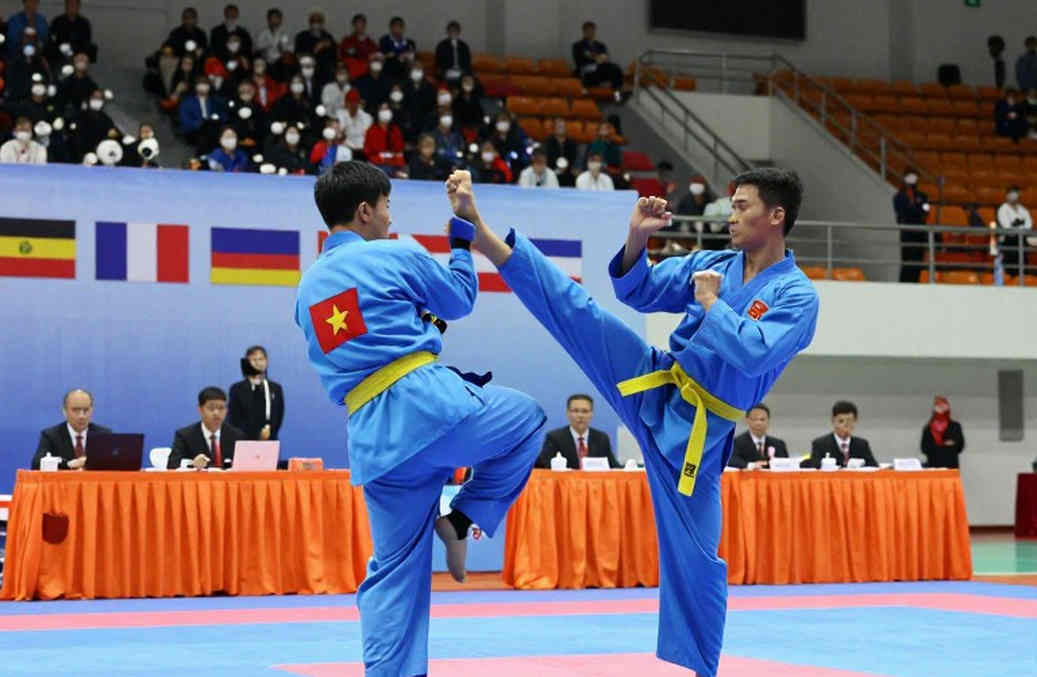
The structural reason sits inside the team system. Bangladesh's boxing, judo and wushu breathe through the Army, Police, Ansars and BGB. That system gives a fighter coaching, a salary, and a competitive life past the age of nineteen. But the archive lives in the team's ledger, not the federation's — and it moves when the fighter is transferred, retires, or leaves. A boxer's career history is really a sum of separate registers, none of which reconciles with the others.
The second reason is money. Information nobody wants to buy is information nobody bothers to write down. Highlight reels have sponsors; weigh-in sheets do not. Yet weight is the most time-sensitive health variable in this sport, and the four to eight weeks between announcement and weigh-in have no independent oversight at all. Before Sura Krishna Chakma of Rangamati fought at The Ultimate Glory in May 2026, I spent ninety minutes behind the locker-room door — the taping, the prayer, the hotel-ballroom weigh-in. Those ninety minutes taught me how to count a match. There is no written record of them today.
My own experience carries a piece of evidence. When the Al Quoz gym shut for fourteen weeks in 2026, twenty-two members trained in a car park. The fan-reaction ledger I keep became the only continuous source for that card's round scores. The archive was built outside the official system, out of WhatsApp messages and Facebook comments. That is not a point of pride. It is proof of a failure: the duty belongs to the institution, and the audience is performing it.
The third reason is the most uncomfortable. Writing about head trauma and dehydration means blaming someone the whole scene loves. So nobody writes it. The sentence that keeps returning to coverage is: no issues were reported. That is the most dangerous sentence in combat-sports journalism, because missing data and missing risk are not the same thing. Absence from the record does not mean it did not happen. It means nobody wrote it down.
The common reading is wrong. Everyone says the problem is that the sport is small. It is small, and therefore there is no audience — except in 2026 there was one, twelve thousand screens deep. The problem is that the sport's information is still treated as promotional material rather than as a medical and legal document. A promoter's reel can be quoted; an unpublished weigh-in sheet leaves a reporter with nothing. Which leads to an inverted conclusion: professional boxing arriving in Bangladesh in 2026 as a business may be good for the sport. Business has a simple condition — it needs contracts, and contracts need written proof of weight, date, medicals and suspensions. Insurers and sanctioning bodies demand what amateur federations have not demanded for decades. The paper trail the amateur system lost may return through profit motive, not goodwill.
One more thing usually drops out of this discussion. Bangladesh had no combat-sports entry at the Paris 2026 Olympics — not in boxing, not in judo, not in wushu. The crowd is growing on screens while the competitive staircase that would hold it does not exist. A staircase that does not exist has no record either, and a record that does not exist cannot be measured from behind.
When the next card comes, I will not count how many times the highlight reel was shared. I will check whether the weigh-in sheet was published, and whether anyone released the round scores of a bout that went missing. A sport that does not keep its own numbers can survive. It cannot claim a history. The question is now plain: if a fight is written down nowhere, did it really happen?